
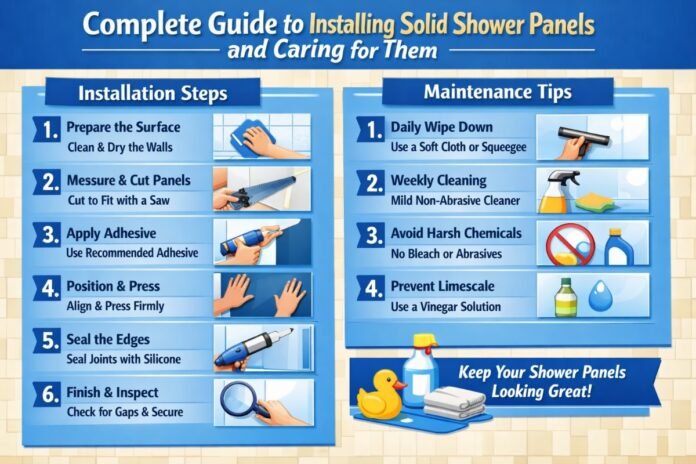

Installing Solid Shower Panels is becoming a popular solution for homeowners who want a stylish, waterproof, and easy-to-maintain bathroom. Unlike traditional tiles, shower panels create a smooth wall surface with fewer joints, making bathrooms easier to clean and maintain. They also provide a modern appearance that works well in contemporary bathroom designs.
Many homeowners choose shower-panels for bathrooms because they offer durability, faster installation, and a sleek finish without complicated tiling work. However, to get the best results, it is important to understand both the installation process and how to care for the panels after they are fitted.
This guide explains the key steps involved in installing solid shower panels and the best practices for maintaining them over time.
What Are Solid Shower Panels?
Solid shower panels are large waterproof wall panels designed to cover shower walls without the need for multiple tiles or grout lines. They are commonly made from materials such as high-pressure laminate, acrylic, or composite boards that resist moisture and daily wear.
Because the panels cover large areas of the wall, they provide a clean and seamless look while reducing the number of joints where water could penetrate.
Before beginning installation, it is useful to understand how to choose solid shower panels so you can select panels that match your bathroom design and durability requirements.
Tools and Materials Required
Installing shower panels requires a few essential tools and materials:
- Measuring tape
- Spirit level
- Adhesive suitable for wall panels
- Sealant for waterproof joints
- Panel trims and corner profiles
- Saw or cutting tool suitable for panels
Step-by-Step Guide to Installing Solid Shower Panels
1. Prepare the Wall Surface
The wall must be clean, dry, and structurally sound before installation begins. Panels can often be installed over existing tiles, plasterboard, or other smooth surfaces.
Ensure that the wall is flat and free from dust or loose materials.
2. Measure the Installation Area
Accurate measurements are essential when installing shower panels. Measure the wall height and width carefully to determine the correct panel size.
Mark cutting points clearly before trimming panels to fit around fixtures such as shower valves or pipes.
3. Cut the Panels to Size
Using the correct cutting tools, trim the panels to match the measured dimensions. Precision cutting ensures that panels fit tightly against edges and corners.
This step helps reduce visible gaps and creates a more professional finish.
4. Apply Adhesive and Fix Panels
Apply panel adhesive evenly across the back of the panel according to the manufacturer’s instructions. Carefully position the panel against the wall and press firmly to secure it in place.
Use a spirit level to make sure the panel is aligned correctly.
5. Install Trims and Seal Joints
Corner trims and joining profiles help create a clean transition between panels and edges. After positioning the trims, apply waterproof sealant along joints and edges.
Proper sealing prevents moisture from entering behind the panels.
6. Allow the Panels to Set
Once installed, allow the adhesive and sealant to cure according to recommended drying times before using the shower.
This ensures the installation remains secure and waterproof.
Tips for Caring for Solid Shower Panels
Clean Regularly
Use a soft cloth or sponge with mild cleaning products to wipe down the panels. Avoid harsh chemicals that could damage the surface finish.
Prevent Soap Build-Up
Soap residue and water spots can accumulate over time. Regular wiping after showers helps maintain a polished appearance.
Avoid Abrasive Materials
Do not use abrasive scrubbers or rough cleaning pads. These can scratch the surface of the panel.
Check Sealants Periodically
Inspect the sealant around joints and edges occasionally. Reapply sealant if necessary to maintain waterproof protection.
Choosing Quality Shower Panels
The durability and appearance of your shower walls depend largely on the quality of the panels you select. High-quality panels offer stronger waterproof protection and better resistance to scratches and impacts.
Homeowners exploring options can view a range of modern designs and materials in these solid shower panels that are designed for contemporary bathrooms.
Common Mistakes to Avoid During Installation
- Inaccurate measurements before cutting panels
- Installing panels on uneven wall surfaces
- Using incorrect adhesive or sealant
- Failing to properly seal panel joints
Careful preparation and correct materials can prevent most installation problems.
Conclusion
Installing solid shower panels is a practical way to upgrade a bathroom with a modern and low-maintenance wall solution. Their seamless design, strong waterproof protection, and easy cleaning make them a popular alternative to traditional tiles.
By following the correct installation steps and maintaining the panels regularly, homeowners can ensure their shower walls remain durable and visually appealing for many years.
Also Read:
- Multipanel Shower Panels vs Tiles, Which Is Best for UK Bathrooms?
- Tiles vs Waterproof Wall Panels: Which is Best for UK Bathrooms
- How to Choose Waterproof Wall Panels for Bathrooms
FAQs about Installing and Caring for Solid Shower Panels
Can solid shower panels be installed over existing tiles?
Yes. In many cases, shower panels can be installed directly over existing tiles as long as the surface is flat, stable, and clean.
How long do solid shower panels last?
High-quality shower panels can last many years when installed correctly and maintained properly.
Are shower panels easier to maintain than tiles?
Yes. Because they have fewer joints and no grout lines, shower panels are generally easier to clean and maintain.
Do solid shower panels require professional installation?
Some homeowners install panels themselves, but larger panels or complex bathroom layouts may benefit from professional installation.