
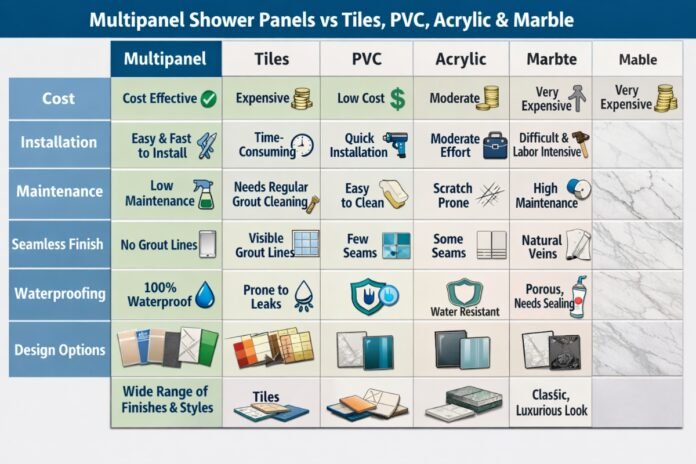

When renovating a bathroom in the UK, one of the most important decisions is choosing the right wall surface. Traditionally, ceramic tiles have been the go-to option. However, modern bathroom wall panels such as multipanel shower panels, PVC panels, acrylic panels, and marble panels are becoming increasingly popular.
Each material has its own advantages, costs, installation requirements, and maintenance needs. UK homeowners, DIY renovators, and installers often compare these options to find the most practical and long-lasting solution for wet areas.
This guide compares multipanel shower panels with tiles, PVC panels, acrylic panels, and marble panels to help you decide which option works best for your bathroom.
Multipanel Shower Panels vs Tiles: Which Is Better for UK Bathrooms?
The comparison between multipanel shower panels and traditional tiles is one of the most common discussions during bathroom renovations.
Tiles have been widely used for decades, but multipanel shower panels offer a more modern approach to waterproof wall coverings.
Multipanel Shower Panels
- Large wall panels designed for bathroom and shower areas
- Quick installation with minimal joints
- Typically grout-free, reducing maintenance
- Available in stone, marble, and contemporary finishes
- Water-resistant when properly installed
Traditional Tiles
- Small ceramic or porcelain pieces installed individually
- Require grout lines between tiles
- Highly customisable patterns
- Installation can take longer
- Grout may require regular cleaning
For many UK bathrooms, multipanel shower panels are preferred for their quick installation and low maintenance, while tiles remain popular for decorative flexibility.
Multipanel vs PVC Shower Panels: What’s the Difference?
Another common comparison is multipanel vs PVC shower panels. While both fall under the category of bathroom wall panels, their structure and durability differ.
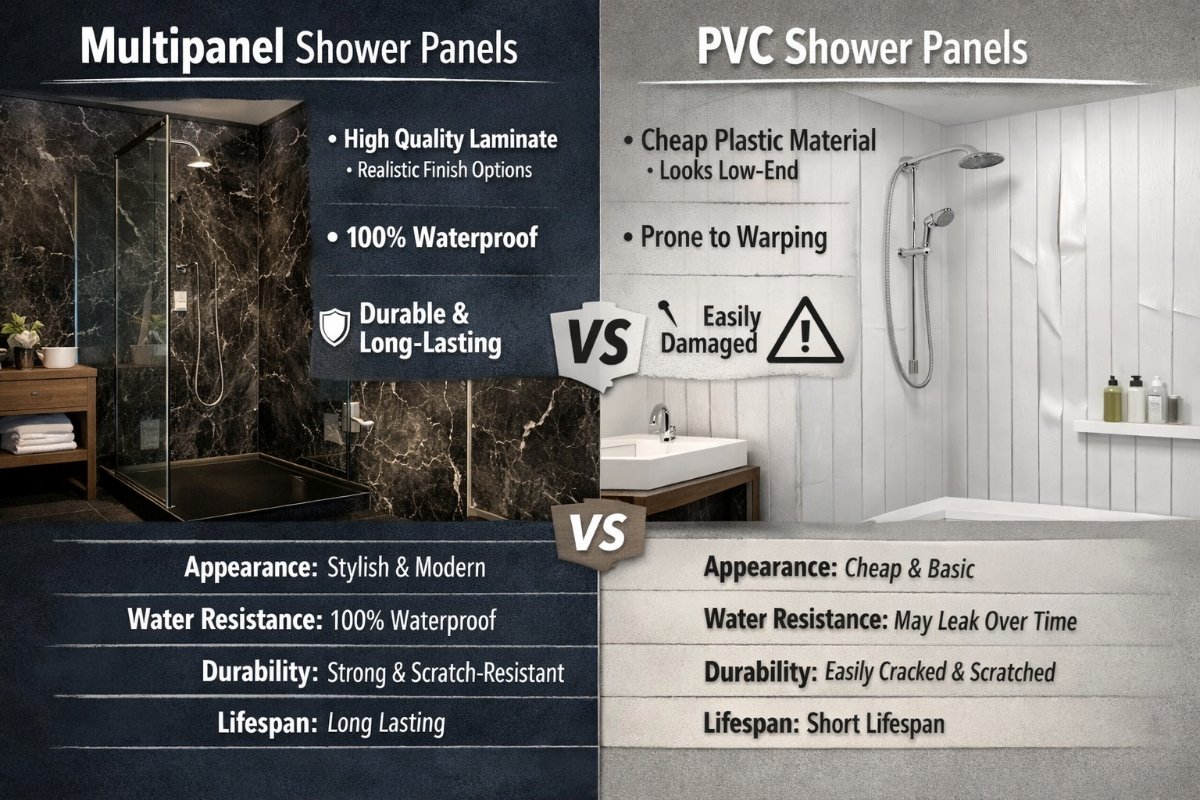
Multipanel Shower Panels
- Thicker and more rigid construction
- Designed to provide a premium wall finish
- Often feature realistic stone or marble effects
- Durable surface suitable for long-term use
PVC Shower Panels
- Made from lightweight plastic materials
- Generally thinner than multipanel panels
- Lower cost option
- Often easier for DIY installation
PVC shower panels are often chosen for budget-friendly renovations, while multipanel panels are typically selected for durability and a higher-end appearance.
Multipanel vs Marble Shower Panels: Which Should You Choose?
Marble-style finishes are popular in modern bathrooms, which leads many homeowners to compare multipanel vs marble shower panels.
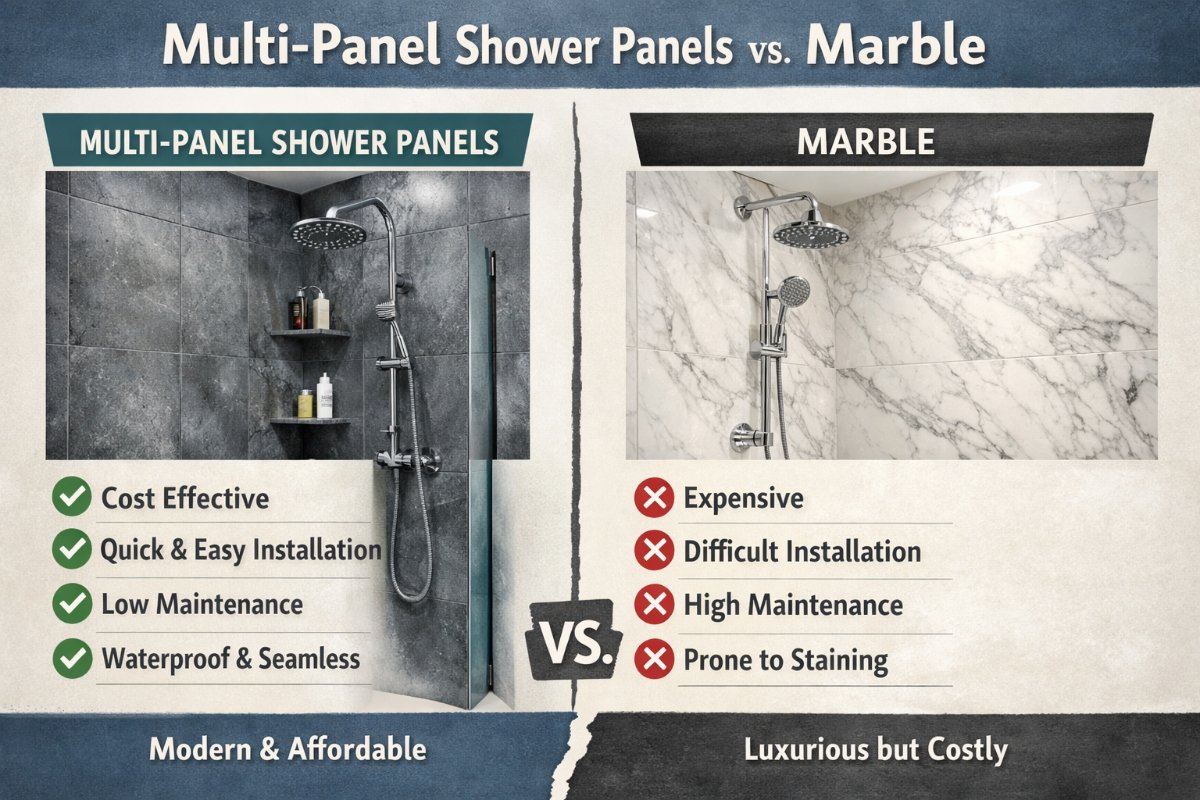
In many cases, marble panels refer either to natural stone slabs or engineered stone panels.
Multipanel Panels
- Often designed to replicate marble or stone finishes
- Lighter and easier to install
- More affordable than natural marble
- Lower maintenance requirements
Marble Panels
- Made from natural or engineered stone
- Premium luxury appearance
- Higher material and installation costs
- Requires sealing and maintenance
For homeowners who want the look of marble without the complexity of stone installation, multipanel shower panels can offer a practical alternative.
Multipanel vs Acrylic Shower Panels: Pros and Cons
Acrylic wall panels are another modern alternative used in bathrooms and shower enclosures.
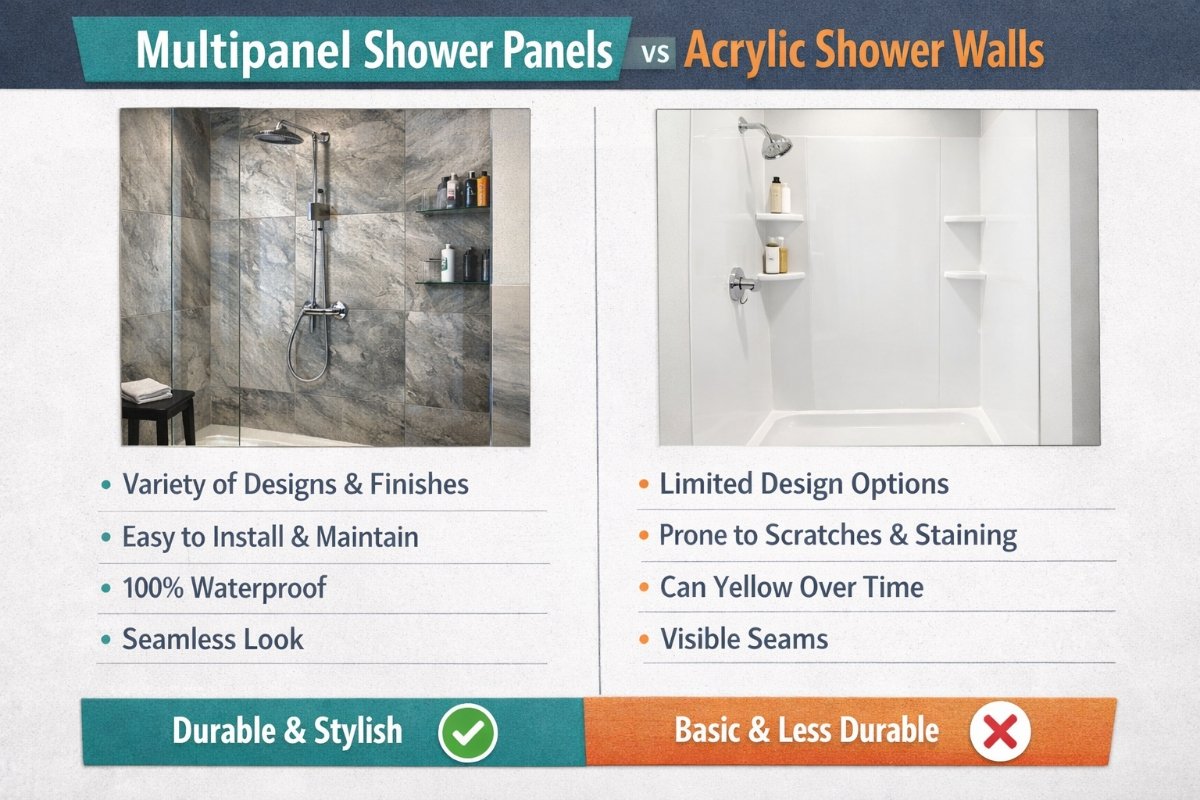
Advantages of Multipanel Panels
- Strong and rigid construction
- Wide range of finishes and textures
- Often thicker and more durable
- Suitable for busy bathrooms
Advantages of Acrylic Panels
- Smooth glossy surface
- Lightweight and easy to handle
- Often simple to clean
Potential Drawbacks
- Acrylic panels can scratch more easily
- Multipanel panels may cost more initially
Both materials work well in shower areas, but the choice often depends on durability needs and preferred aesthetics.
Multipanel vs Traditional Wall Tiles: Cost Comparison in the UK
Cost is a major factor when comparing shower panels vs tiles in the UK. While prices vary depending on brand and installer rates, some general differences exist.
Typical Cost Factors
- Material price per square metre
- Installation labour costs
- Preparation work
- Long-term maintenance
Multipanel Shower Panels
- Higher material cost than basic tiles
- Faster installation may reduce labour costs
- No grout maintenance
Traditional Tiles
- Wide price range depending on tile type
- Labour-intensive installation
- Grout cleaning and maintenance required
In many cases, while tiles can be cheaper initially, the overall installation time and maintenance may make wall panels a practical long-term option.
Quick Comparison Table
| Material | Cost | Installation Difficulty | Waterproofing | Maintenance | Durability | Appearance |
|---|---|---|---|---|---|---|
| Multipanel Panels | Medium | Moderate | High | Low | High | Modern finishes |
| Tiles | Low to High | High | High | Medium | High | Highly customisable |
| PVC Panels | Low | Easy | Moderate | Low | Moderate | Simple designs |
| Acrylic Panels | Medium | Moderate | High | Low | Moderate | Glossy modern look |
| Marble Panels | High | Difficult | High | Medium | Very High | Luxury appearance |
Which Option Is Best for UK Bathrooms?
The best wall surface depends on your priorities. If you want a quick installation and minimal maintenance, multipanel shower panels can be a strong choice. For homeowners who prefer traditional styling or intricate patterns, tiles may still be appealing.
PVC panels offer a budget-friendly option, while acrylic panels provide a sleek modern finish. Marble panels deliver a luxury appearance but often come with higher costs and maintenance requirements.
Conclusion
Choosing between multipanel shower panels, tiles, PVC panels, acrylic panels, and marble panels depends on your budget, design preferences, and installation plans.
Multipanel shower panels are often chosen for their durability, contemporary appearance, and relatively simple installation. Tiles remain a versatile classic, while PVC, acrylic, and marble panels each offer unique benefits.
For many UK bathrooms, modern wall panels provide a practical alternative to traditional tiling, especially when quick installation and low maintenance are important.
Frequently Asked Questions About Multipanel Shower Panels
Are multipanel shower panels fully waterproof?
When installed correctly with proper joints and sealants, multipanel shower panels are designed to provide effective water resistance in shower areas and bathrooms.
Can multipanel panels be installed over tiles?
Yes, many installers place bathroom wall panels over existing tiles if the surface is flat and properly prepared.
Are multipanel shower panels suitable for wet rooms?
Multipanel panels are commonly used in shower enclosures and can also be suitable for wet room walls when installed according to manufacturer guidance.
Do shower panels require grout?
Most modern shower panels are designed to fit together without grout, which helps reduce cleaning and maintenance.
How long do multipanel shower panels last?
With proper installation and care, high-quality wall panels can last many years in residential bathrooms.
Are wall panels easier to maintain than tiles?
Many homeowners find panels easier to clean because they have fewer joints and no grout lines that can collect mould or dirt.